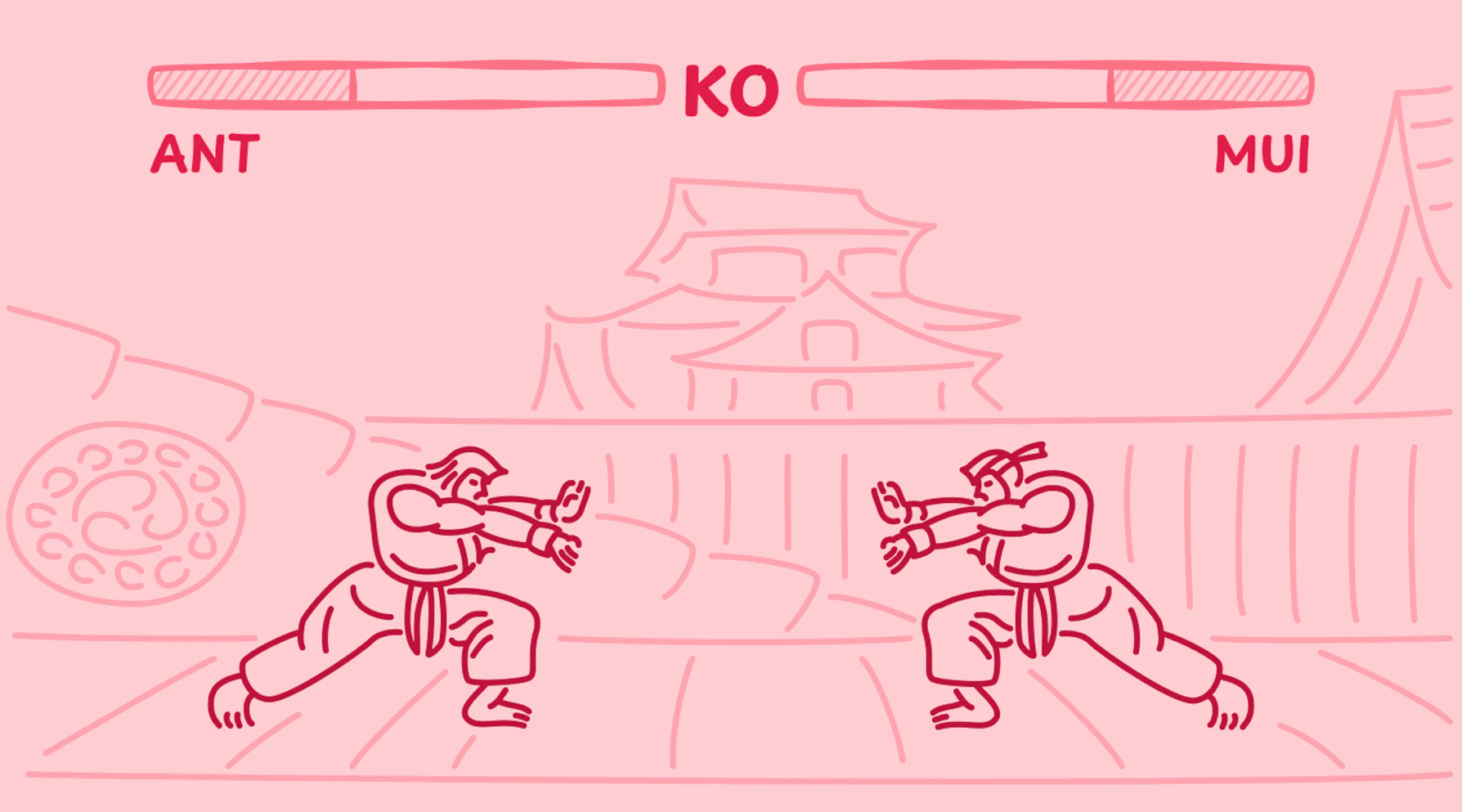
If you've built a React admin panel or dashboard, you've almost certainly run into this question: Ant Design or MUI? Both are mature, widely used, and capable of handling production-grade applications. But they make very different choices about design language, component APIs, and how much they let you customize things. Picking the wrong one for your project isn't fatal, but it creates friction you'll feel for months.
This post breaks down the key differences so you can make an informed choice for your use case, whether that's an internal tool, a data-heavy dashboard, or a customer-facing admin panel.

What Is Ant Design?
Ant Design is a design system and React component library developed and maintained by Alibaba Group. It's built around a comprehensive design specification called the "Ant Design System," originally created to standardize the user interfaces across Alibaba's enterprise products.
The library has grown into one of the most popular React component libraries in the world, especially within Asia and in enterprise contexts. As of early 2026, it has over 90,000 GitHub stars and a massive ecosystem of third-party components and integrations.
Ant Design takes a batteries-included approach. You get a large set of components covering everything from basic inputs and buttons to complex data tables, date pickers, tree selects, and form builders. The default visual style is polished and enterprise-appropriate without requiring much configuration.
The library is maintained by a large team and releases updates regularly. Its TypeScript support is thorough, and the documentation is detailed and includes interactive examples for nearly every component and prop.
What Is Material UI (MUI)?
Material UI, commonly referred to as MUI, is a React component library that implements Google's Material Design specification. It's been around since 2014 and is one of the longest-standing React UI libraries. By star count alone, it's arguably the most popular React component library in the world with over 90,000 GitHub stars.
MUI has expanded well beyond just Material Design. Today, the MUI ecosystem includes the core Material Design components (in the @mui/material package), MUI X for advanced components like data grids and date pickers, MUI System for a flexible styling approach, and Joy UI for a lighter alternative design system. This makes MUI more of a platform than just a single component library.
Material Design, the underlying design language, is familiar to most users because it powers a enormous portion of Google's products and Android applications. This familiarity can be an asset when you want users to feel at home immediately.
Design Philosophy and Visual Style
This is one of the most immediately obvious differences between the two libraries.
Ant Design leans toward a structured, information-dense style. Its components are designed for enterprise applications where you're showing a lot of data at once. Tables, forms, drawers, and modals all feel purposeful and functional. The default color palette is neutral with a blue accent. If your product is an internal tool or admin panel where productivity matters more than aesthetics, the Ant Design defaults get you closer to a finished product with less CSS work.
MUI's Material Design aesthetic is rounder, more colorful, and more opinionated. Buttons have ripple effects, elevation creates depth through shadows, and the overall feel is consumer-app rather than enterprise-tool. If your admin panel faces external users or needs to align with a Google-adjacent visual identity, MUI's defaults are appealing. For internal tools, though, Material Design sometimes feels a bit too playful, and the theming work required to get to a neutral enterprise style can be substantial.
Neither aesthetic is objectively better. It depends entirely on your product's audience and your team's bandwidth for customization. If you want to see the difference in practice, the Refine template gallery is a good starting point: the Ant Design templates and Material UI templates show real admin panel layouts built with each library side by side.
Component Library Comparison
Both libraries cover all the foundational components you'd expect, but they differ in depth and specialization.
Data display: Ant Design's Table component is one of its standout offerings. It handles sorting, filtering, pagination, row selection, expandable rows, and virtual scrolling out of the box. For admin panels, this is huge, because data tables are often the core of the whole product. MUI's basic Table is simpler and more of a building block. To get advanced features you need MUI X, which has a separate licensing model (the community tier is free, the pro and premium tiers require a paid license).
Form components: Ant Design's Form component handles validation, layout, and submission with a unified API. It integrates directly with all its input components through the name prop pattern, making it easy to build complex forms without wiring up state management yourself. MUI provides input components but doesn't have a built-in form system. You'll typically pair MUI with React Hook Form or Formik, which works fine but adds setup.
Date and time: Ant Design uses Day.js for date handling, and its DatePicker, RangePicker, and TimePicker components are feature-rich. MUI Date Pickers live in MUI X and require separate installation. They've improved a lot over the years, but the integration experience is more complex.
Navigation: Both libraries have strong navigation components. Ant Design's Menu, Breadcrumb, and Layout components are particularly well-suited to the sidebar-plus-content admin panel layout pattern. MUI provides Drawer, AppBar, and List components that you compose yourself, which gives more flexibility but requires more work.
Feedback and overlays: Both have modal dialogs, tooltips, notifications, and loading states. Ant Design includes a global message and notification system that you can access imperatively (calling message.success('Done') without needing to render a component). MUI's approach is more React-idiomatic using context and components like Snackbar.
Theming and Customization
Customization is where the two libraries diverge most significantly in terms of developer experience.
MUI's theming system is extensive and powerful. You create a theme object that controls typography, colors, spacing, breakpoints, and component overrides. The sx prop lets you apply theme-aware styles inline on any MUI component. MUI System, the underlying styling engine, uses Emotion (or optionally styled-components) and provides CSS-in-JS utilities. If you want deep control over every visual detail, MUI gives you that, but there's a learning curve.
Ant Design's theming system got a significant overhaul in version 5, moving to a CSS variables and design token approach. You can now override design tokens globally to change colors, border radii, font sizes, and spacing across the entire component set with minimal code. For most customization needs, this token system gets you there faster than MUI's approach. When you need component-level overrides, Ant Design exposes styles props and classNames props on complex components, which is useful.
For very heavy customization, like redesigning a component from scratch, MUI arguably gives you more tools. But for the 80% case, which is adjusting colors and spacing to match a brand, Ant Design v5's token system is quicker to work with.
Performance and Bundle Size
Bundle size is a legitimate concern, especially for admin panels that may already pull in a lot of dependencies.
Both libraries are large. Neither is something you'd use for a performance-sensitive marketing page. In an admin panel or internal tool context, where you're loading the app once and users interact with it for hours, the initial bundle size is less critical than in a public-facing consumer app.
That said, tree shaking has improved in both libraries. If you're importing components correctly with named imports, you'll only bundle what you use. Ant Design v5 ships with better tree shaking support than previous versions. MUI has supported proper tree shaking for several years.
For complex data rendering, MUI X's DataGrid is highly optimized for large datasets with virtual scrolling. Ant Design's Table with virtual mode handles large lists well too, using rc-virtual-list under the hood.
On the rendering side, both perform well for typical admin panel workloads. If you're building something with extremely high data volumes and complex interactions, it's worth benchmarking your specific use case rather than relying on general impressions.
TypeScript Support
Both libraries have first-class TypeScript support today. All components are typed, props are documented, and you get autocomplete in any TypeScript-aware editor.
Ant Design's types have historically been more complex in some areas, with some components having deeply nested generic types. In practice this rarely causes problems, but occasionally you'll encounter a type that requires explicit annotation to satisfy the compiler.
MUI's TypeScript experience is generally smooth, and the MUI team has invested significantly in making the types intuitive. The sx prop is fully typed against your theme, which is genuinely helpful.
Either library will work well in a TypeScript project. This is not a major differentiating factor.
Use Case: Admin Panels and Dashboards
This is where many developers are actually choosing between the two, so it's worth spending some time on it.
For admin panels and dashboards, Ant Design is often the faster path to a functional product. Its data table, form system, layout components, and built-in feedback patterns are all designed with this use case in mind. You can scaffold a CRUD-heavy admin panel with Ant Design and get something usable quickly, without making many design decisions along the way.
MUI can absolutely power great admin panels, but you're composing more of the interface yourself. That flexibility is an asset if you have specific UX requirements or a strong in-house design system to align with. If you're starting fresh and want a default that looks professional, you'll need to do more theming work with MUI than with Ant Design.
This is partly why frameworks like Refine support both libraries as UI integrations. Refine is a React meta-framework for building admin panels, dashboards, and internal tools. It provides the application-level concerns, routing, data fetching, authentication, access control, and CRUD logic, while letting you pick MUI or Ant Design as the component layer. You get the structural benefits of Refine with the component set you prefer or are more familiar with.
The @refinedev/antd and @refinedev/mui packages both provide ready-to-use CRUD components tailored to each library's API and style conventions. If you're evaluating both libraries for an admin panel project, Refine is worth looking at because it removes much of the scaffolding work regardless of which UI library you pick.
Ecosystem and Community
Both libraries have large, active communities.
Ant Design's community skews toward enterprise developers and developers in Asia. The documentation is available in both English and Chinese, and a significant portion of third-party resources (tutorials, component kits, templates) are in Chinese. This isn't a dealbreaker for English-language developers, but it means the English ecosystem is somewhat smaller relative to the library's actual usage.
MUI's community is globally distributed, and the English-language resources are extensive. There are more English-language tutorials, starter templates, and UI kits for MUI than for Ant Design. npm download counts consistently show MUI higher than Ant Design, which reflects broader global adoption.
For long-term support, both libraries are well-funded and actively maintained. Ant Design has Alibaba behind it. MUI is backed by significant enterprise adoption and has built a commercial product around MUI X. Neither is at risk of being abandoned.
When to Choose Ant Design
Ant Design is a strong choice when:
You're building an internal tool or admin panel where the default component styles are appropriate and you want to move fast. The form system, data table, and layout components work well together with minimal glue code.
Your application is data-heavy with complex filtering, nested tables, tree controls, or multi-step forms. Ant Design has first-class support for patterns like this.
Your team has prior experience with Ant Design, or your organization already has a design system based on its token system.
You want a rich component library where most things are covered without pulling in additional packages for advanced components.
When to Choose MUI
MUI is a strong choice when:
Your application needs to align with Material Design guidelines, or your users are already familiar with Google's product interfaces.
You want maximum flexibility in theming and are willing to invest time in building out a custom design system on top of MUI's infrastructure.
You need an advanced data grid with features like column grouping, row editing, or Excel-style interactions, and are okay with MUI X's licensing for the pro features.
Your team has strong React and CSS-in-JS experience and prefers composing interfaces from foundational components rather than using opinionated higher-level components.
Summary
| Feature | Ant Design | MUI |
|---|---|---|
| Design language | Enterprise, information-dense | Material Design, consumer-friendly |
| Form system | Built-in, integrated | Pairs with external libraries |
| Data table | Feature-rich, built-in | Basic table; advanced via MUI X |
| Theming | Design token system (v5) | Comprehensive theme + sx prop |
| TypeScript | First-class | First-class |
| English community | Smaller relative to usage | Large and well-documented |
| Admin panel fit | Excellent out of the box | Good with more setup |
| License | MIT | MIT (MUI X has paid tiers) |
There's no universally correct answer here. Ant Design gets you to a working admin panel faster with less configuration. MUI gives you more flexibility and aligns with a familiar design language with a broader English-language ecosystem.
If you're evaluating both for an admin panel or internal tool project, the fastest way to get a sense of the real-world experience is to bootstrap one with Refine and try both integrations. You'll get the application structure handled for you and can focus on evaluating the component APIs and visual styles in context.
FAQ
Can I use both Ant Design and MUI in the same project?
Technically yes, but you probably shouldn't. Both libraries bring their own styling layers and can conflict in unexpected ways. The bundle size impact of loading both is also significant. Pick one and stick with it.
Is Ant Design only for enterprise applications?
No, but its design language is optimized for information-dense enterprise interfaces. You can use it for any project, but the default aesthetic skews toward admin and internal tool use cases rather than consumer-facing apps.
Does MUI require Material Design?
Not strictly. You can customize MUI's theme extensively to move away from Material Design visually. MUI also offers Joy UI as an alternative design system built on the same infrastructure. That said, the default output looks like Material Design, and heavy customization requires meaningful effort.
Is MUI X required for a data grid?
If you need advanced features like filtering, column pinning, or row grouping, yes, you'll need MUI X. The community edition's DataGrid covers sorting and pagination. Ant Design's Table covers most of these features without a separate package or paid license.
Which is faster to prototype with?
Ant Design, in most cases. The built-in form system, pre-styled layout components, and ready-to-use feedback patterns mean less setup work for a typical admin panel. MUI is faster than building from scratch, but slower than Ant Design for data-heavy CRUD interfaces.
How does Refine relate to this comparison?
Refine is a React meta-framework for admin panels and internal tools. It integrates with both Ant Design and MUI and handles application-level concerns like routing, data fetching, auth, and access control. Using Refine with either library gives you a production-ready scaffold so you can focus on your product logic rather than infrastructure. You can read more about it at refine.dev.