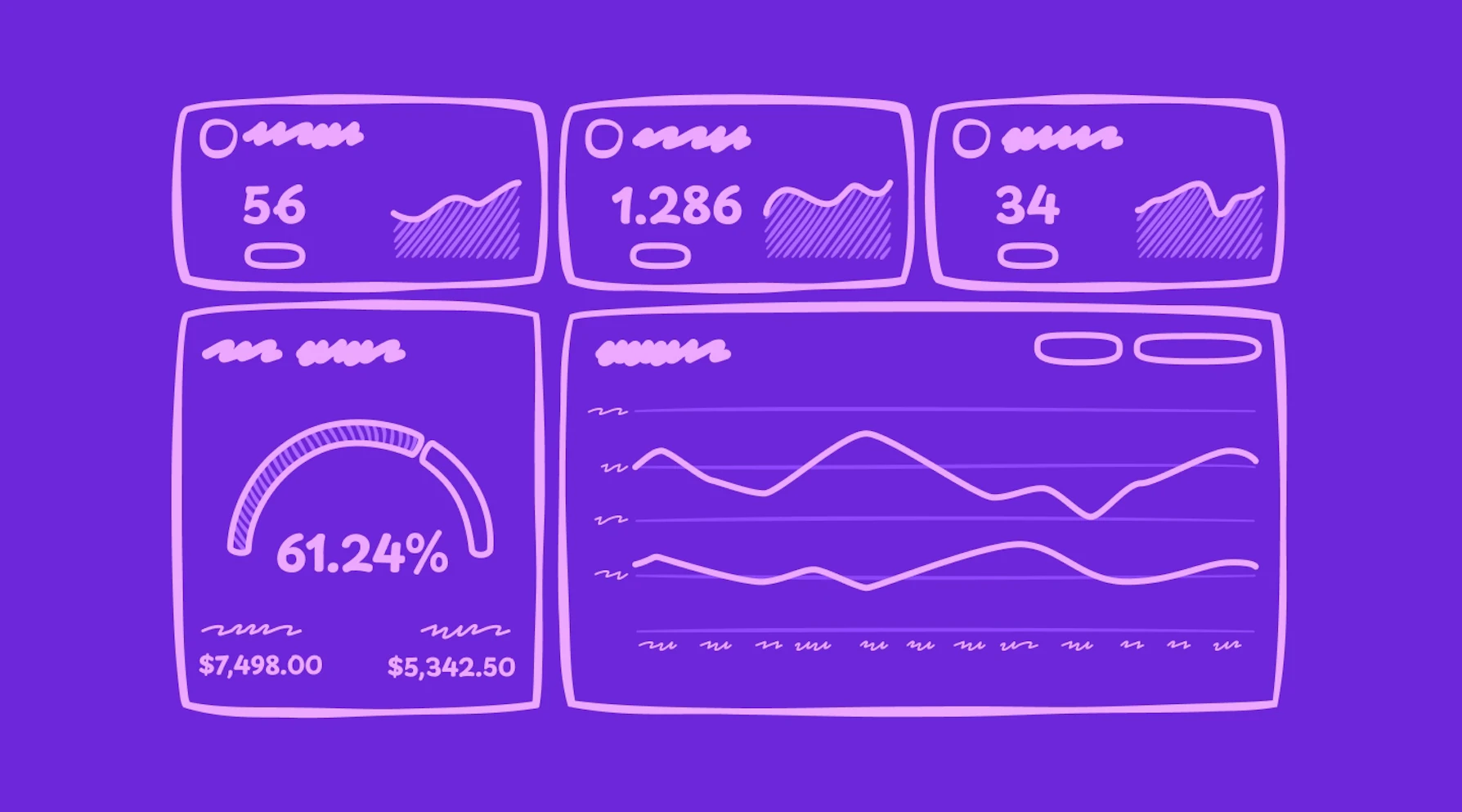
Your support team needs to look up customer records, update subscription status, and occasionally issue refunds. Right now they message engineering in Slack, wait hours for a response, and sometimes resort to asking for direct database access. The risk is obvious. One wrong query could delete production data.
This scenario repeats at companies of every size. The tool they need is an admin panel: a secure internal interface that lets authorized staff manage the backend without touching raw database consoles. Simple concept. But building one from scratch takes weeks because teams keep reinventing the same patterns.
Admin panels are among the most common types of internal software. Nearly every company with customers eventually needs one, yet few teams have a clear sense of what separates a good admin panel from a fragile internal tool held together with duct tape and good intentions.
What an admin panel is
An admin panel is an internal interface that lets authorized staff manage, configure, and operate the backend of a software system. The backend includes data, users, content, workflows, and settings.
The key characteristics:
-- Centralized control center for managing application data, users, permissions, content, and system configuration
- Used only by internal roles (admins, ops, support, finance, moderators), not by regular end users
- Action-oriented with tools to perform operations: CRUD on records, approvals, refunds, banning users, toggling features, configuring prices
- Built on top of the backend but itself a frontend UI for operating business logic that would otherwise require direct database or API access
Scope commonly includes user and role management, content and catalogue management, operations tools like approvals and payouts, and system configuration like feature flags and integrations.
Admin panel vs dashboard
A dashboard is usually a read-oriented view of key metrics, while an admin panel is action-oriented and broader in scope.
Dashboards:
- Present KPIs, metrics, and trends at a glance using charts and summaries
- Designed for monitoring and decision support
- May be used by admins, managers, or even customers
Admin panels:
- Full management environment including dashboards plus CRUD tools, workflows, and configuration
- More complex UI because they expose many actions and settings
- Focused on internal control and governance
| Aspect | Admin panel | Dashboard | Customer-facing app |
|---|---|---|---|
| Primary purpose | Operate and configure internal systems | Monitor metrics and KPIs | Let customers use the product |
| Main users | Admins, ops, support, internal staff | Admins, managers, executives | End users and customers |
| Main actions | CRUD, approvals, overrides, settings | Filter, drill down, observe trends | Domain tasks (buy, book, message) |
| Data access scope | Broad, often all entities | Aggregated, summarized metrics | Limited to user's own data |
| Security sensitivity | Very high; powerful permissions | High but often read-mostly | High but scoped per user |
Many applications combine all three: a dashboard for metrics, CRUD views for data management, and admin controls for system configuration.
How much time companies spend on internal tools
The numbers here surprised me.
Retool's 2022 State of Internal Tools report found that engineers spend about 33% of their time building and maintaining internal tools. A third. That includes admin panels, dashboards, and custom ops tools. Respondents at larger companies spend even more time on internal use cases; the work grows as organizations scale.
A Contrary Research market analysis estimates the internal tools market at roughly $250 billion in 2022. That figure includes admin dashboards, back-office systems, and operations tools.
Global IT spend is around $4.5 trillion annually. Internal tools are taking a growing share. Yet roughly half of survey respondents said lack of time and engineering resources is their primary obstacle. Internal tools compete with customer-facing features for developer attention. They typically lose.
Case studies: how companies build admin panels
Real companies have documented their approaches. The numbers tell the story better than abstractions.
DoorDash: from months to minutes
DoorDash started with Django Admin for internal tools. Dasher route visualization, region editing, restaurant tools. It worked until it didn't. The platform became hard to scale and prone to performance issues.
Building each new internal tool used to take one to two months. That blocked operators running programs like the Dasher rewards system. After adopting a low-code platform, DoorDash reduced build times from one to two months per tool to 30 to 60 minutes. Routine tweaks like adding filters or dropdowns went from multi-week overhead to a few minutes.
A separate UX case study on DoorDash's internal menu-building tool shows what good tooling can do. Improving validation and workflows reduced spelling errors by 73% and pricing errors by 56% in menus created by internal operators. Before the redesign, nearly two out of three menus audited had critical errors.
Brex: 75% less code
Brex adopted low-code tooling early. They treated internal tools as a first-class part of the product rather than afterthoughts.
An early example was a transaction simulator. Instead of spending hours or days writing a one-off CLI tool, an engineer built a shared internal UI in under 30 minutes using prebuilt components and existing APIs.
Brex reports that this approach reduced the code needed to ship certain internal features, like notification template tooling, by about 75%. More than 15 teams at Brex now build internal ops tools this way. The company scaled roughly 10x in three years.
Coinbase: internal tools platform
Coinbase moved from a monolithic, centralized internal tooling codebase to an internal tools platform that standardizes auth, permissions, and data access. Teams can then build their own tools using this infrastructure.
Critical internal apps like a transaction and tax admin tool can now be built in a few days instead of the much longer cycles they had with their old monolithic framework. The internal tools team provides shared infrastructure so product teams can create and maintain their own admin tools without bottlenecking on a central team.
Oscar Health: consolidated workflows
Oscar, a health insurance provider, dealt with siloed systems for tracking and managing authorization requests. Different teams used different tools; data lived in multiple places.
They built a utilization management application that consolidated these workflows into a single CRUD interface. The technical complexity was modest. The business value came from unifying data access and standardizing the process.
Common admin panel use cases by industry
Admin panels serve different purposes depending on the domain.
E-commerce and marketplaces:
- Product and inventory management, pricing, promotions, category structure
- Order lifecycle control (manual edits, cancellations, refunds, shipment overrides)
- Vendor onboarding, KYC, dispute and fraud handling
SaaS and B2B platforms:
- Tenant and subscription management, plan changes, feature flags
- Advanced customer support tooling (impersonation, manual data fixes, SLA monitoring)
- Role-based access configuration and audit logs
Fintech and banking:
- KYC/AML review queues, transaction monitoring, risk scoring, manual holds and releases
- Limits and fees configuration, card management, dispute workflows
Mobility, logistics, and travel:
- Fleet and asset management (vehicles, drivers, routes, maintenance schedules)
- Booking overrides, inventory allocation, partner management
Content and community platforms:
- Editorial tools for publishing and moderating content
- User moderation (bans, reports triage, community settings)
Healthcare and education:
- Staff and facility scheduling, capacity management
- Program and course configuration, enrollment control, permissions over sensitive records
Security risks for admin panels
Admin panels are high-value targets. They grant privileged access to sensitive data and system controls. If an attacker compromises an admin panel, they often compromise everything.
OWASP identifies broken access control as the top web application risk. Admin panels are especially vulnerable.
Broken access control
The most critical risk. Attackers bypass restrictions through URL tampering, force browsing to paths like /admin/, insecure direct object references, or metadata manipulation like JWT tampering. According to OWASP, there have been 318,000+ occurrences of access control vulnerabilities documented.
A user requests /api/orders/12345 and the application returns the order. The user changes the request to /api/orders/12346 and the application returns someone else's order. This pattern, called insecure direct object reference, is particularly common in CRUD applications.
Authentication failures
Weak passwords, no multi-factor authentication, default credentials, and session fixation all create entry points. Admins are often targeted for credential stuffing attacks.
Injection attacks
Admin forms handle bulk data. Unsanitised inputs lead to data exfiltration or remote code execution. SQL injection vulnerabilities persist; security research has documented cases where attackers could retrieve all API keys from databases and compromise accounts.
Mass assignment vulnerabilities
The 2012 GitHub incident remains a canonical example. A mass assignment flaw allowed a user to upload SSH keys to organizations they did not control. The vulnerability occurred because the framework automatically bound request parameters to model properties without restricting which fields could be updated.
Security implementation checklist
Based on OWASP guidelines, here is what to get right:
For access control: authorization checks on every endpoint (not just read operations), object-level access validation confirming users can only access their own records, role-based permissions enforced server-side, and audit logging for sensitive operations including deletes.
For input handling: parameterised queries or ORM methods that prevent SQL injection, explicit allowlists for mass assignment specifying which fields accept updates, and input validation on all fields covering type, length, and format.
For network and deployment: IP restrictions, VPN for admin hosts, HTTPS with HSTS, and hidden or renamed admin paths with no directory listing.
For session and auth: multi-factor authentication, strong passwords, timed and secure session IDs, and monitoring of failed logins.
Architecture patterns for admin panels
Admin panels commonly follow layered architectures with security built in through RBAC, audit trails, and tenant isolation.
Role-based access control (RBAC)
RBAC assigns permissions through roles (admin, manager, support), enforced server-side. Implementation involves a permission matrix defining what each role can do, hierarchical roles where super-admin inherits from admin, and middleware checks that validate permissions on every request.
Best practices include server-side enforcement rather than just UI hiding, least privilege principles, quarterly reviews of permission assignments, and CI/CD integration for permission changes.
Audit logging
Immutable logs track sensitive actions for compliance and debugging. The recommended structure includes timestamp, tenant ID, user ID, action type (CREATE/UPDATE/DELETE), resource ID, and before/after values.
Events to capture include admin actions like role changes, data access and modifications, authentication events, and configuration changes. Async and batched writes through queues help with performance. PII redaction addresses GDPR requirements.
Multi-tenancy
Isolates tenants (customers or organizations) in shared infrastructure. Patterns include shared database with row-level security using tenant_id filters, separate schemas per tenant, or separate databases per tenant. The choice depends on isolation requirements, performance needs, and operational complexity tolerance.
Overall architecture pattern
The common pattern is microservices plus single-page application frontend. Backend APIs using REST or GraphQL serve a React, Vue, or Angular frontend. Container components fetch data and manage state; presentational components render UI. This separation makes the codebase more maintainable and testable.
Build vs buy: how to decide
This decision trips up a lot of teams. The tradeoffs are real, and the right answer depends on context.
Decision factors
Time to value. Low-code platforms enable prototypes in hours or days. Custom builds take weeks or months. If you need something working by Friday, platforms win.
Customization. Custom offers unlimited control over logic, UI, and integrations. Platforms constrain you to what the platform supports. That constraint might be fine, or it might mean ugly workarounds and eventual lock-in.
Total cost. Platforms reduce upfront dev time, often by 10x. But they add licensing and subscriptions. Custom incurs high maintenance and hosting costs. You pay now or you pay later.
Maintenance burden. Platforms handle updates and security patches. Custom requires in-house expertise and scales poorly without dedicated teams.
Team skills. Platforms empower non-developers and business users. Custom demands full-stack engineers.
Strategic fit. Build if the tool differentiates revenue, core product, or IP. Use platforms if the tool is internal and non-competitive.
Decision matrix
| Factor | Custom build | Platform-based |
|---|---|---|
| Speed | Slow (weeks to months) | Fast (hours to days) |
| Flexibility | Unlimited | Constrained by platform |
| Upfront cost | High engineering time | Low (subscriptions) |
| Maintenance | High (ongoing dev) | Low (platform-managed) |
| Best for | Core IP, complex scale | Internal ops and dashboards |
| Risk | Over-engineering, delays | Vendor lock-in |
Hybrid approach
The strategy that often works: "buy-then-build." Start with a platform for speed. Extend or replace components as needs become clearer.
If you are genuinely unsure, pilot both approaches. Build a small tool each way. Track total cost of ownership over one to two years, including opportunity cost. The data will tell you which approach fits your situation.
Common mistakes when building admin panels
I see these patterns repeatedly in codebases.
Exposing the database schema
Auto-generating REST endpoints from database tables creates tight coupling. External clients depend on internal implementation details. When the schema changes, the API breaks.
Design APIs around use cases and business operations rather than database structure.
Single model for everything
Using one struct or class for the API, database, and validation seems efficient. It isn't.
When you want to update anything in the struct, you have no idea what else will change. You can break the API contract by changing the database schema. Go web development guides call this out specifically.
Separate models for separate concerns: HTTP models for serialization, database models for persistence, domain models for business logic. More files, fewer surprises.
Pushing logic to clients
When APIs are purely CRUD, clients must orchestrate multiple calls and enforce business rules. The complexity shifts from the server, where it belongs, to every client that consumes the API.
Skipping access control on write operations
Many applications protect GET requests but leave POST, PUT, and DELETE operations exposed. Some enforce permissions in the frontend but not on the server. Attackers bypass the interface entirely.
Frontend-only access control is no access control.
Frequently asked questions
What is the difference between an admin panel and a dashboard?
An admin panel is action-oriented, letting users create, update, and delete records plus configure system settings. A dashboard is read-oriented, displaying metrics and visualizations for monitoring. Admin panels often include dashboards as one section, but they go beyond read-only views.
How long does it take to build an admin panel?
Platform-based approaches take hours to days. Custom development from scratch takes weeks to months. The complexity of business rules and number of entities are the primary variables. DoorDash reported reducing build times from one to two months to 30 to 60 minutes using a platform approach.
What are the biggest security risks for admin panels?
Broken access control tops the OWASP list. Specifically: missing authorization on write operations, insecure direct object references allowing users to access other users' records, mass assignment vulnerabilities, and SQL injection from unsanitized input.
When should I build custom vs use a platform?
Build custom when the admin panel encodes unique business logic, intellectual property, or requires complex integrations that platforms cannot support. Use platforms for standard internal operations like user management, order processing, or content moderation where speed matters more than customization.
What architecture pattern should I use?
The common pattern is microservices plus single-page application. Implement RBAC for permissions, audit logging for compliance and debugging, and consider multi-tenancy if serving multiple customers or organizations. Enforce all security on the server side, not just in the UI.
Who should have access to admin panels?
Only authorized internal staff with clearly defined roles. Implement the principle of least privilege, giving each role only the permissions necessary for their job function. Review permissions quarterly and use multi-factor authentication for all admin accounts.
How do admin panels handle sensitive data?
Through access controls, audit logging, and encryption. Every access to sensitive records should be logged with timestamp, user ID, and action type. PII should be redacted from logs where GDPR or similar regulations apply. Network access should be restricted through IP allowlists or VPN requirements.
Related content
- What is a CRUD App? — The complete guide to CRUD applications
- What is a Dashboard? — Dashboards explained
- What is an Internal Tool? — The complete guide
Start building with Refine
Connect your database and describe the admin panel you need. Get started free — no credit card required.